
Unlocking the “Missing Middle”: A New Agenda to De-risk Youth Entrepreneurship and Drive Economic Growth

Youth Business International (YBI), the global leader in youth entrepreneurship, is calling for urgent action to support high-growth potential youth-led businesses trapped in the “missing middle.” YBI’s new policy paper sets out strategies to de-risk youth entrepreneurship and unlock sustainable economic growth, job creation, and innovation — particularly among underrepresented youth, women, and businesses outside traditional tech hubs.

Youth Entrepreneurship: A Missed Opportunity for Sustainable Economic Growth

Across the world, young entrepreneurs are building businesses with the potential to transform economies — creating jobs, driving innovation, and strengthening resilience. Yet far too many are stuck in the “missing middle”: too big for microfinance, too small or risky for mainstream investors. The result? Their potential remains untapped.

At Youth Business International (YBI), we believe this is not just a missed opportunity —it’s an economic liability. Our new policy paperDe-risking Youth Entrepreneurship and Unlocking the Missing Middle, developed in collaboration with our member Habitat in Türkiye, offers a clear call to action: we must reimagine how we support youth-led businesses with high growth potential.

Why the “Missing Middle” Matters

Globally, the SME financing gap is vast. In sub-Saharan Africa alone, that gap is estimated at $331 billion. In the UK, it’s £22 billion, according to a Bank of England report. Youth-led businesses — particularly those founded by women, rural youth, or from underrepresented groups — are disproportionately affected.

Outdated perceptions of what constitutes a “high-growth” business often lead investors to overlook dynamic entrepreneurs outside of major urban centres or the tech sector. But high growth happens in creative industries, green businesses, services, and manufacturing, often in less visible places. It’s time to shift the narrative.

A Blueprint for Action

YBI’s new policy paper sets out practical, evidence-based strategies for policymakers, financial institutions, and enterprise support organisations (ESOs) to enable youth-led businesses to grow and thrive. These include:

1. Co-designed Financial Products

Young entrepreneurs need finance that fits their realities. That means developing tailored products — such as uncollateralised loans, milestone-based financing, or community-based guarantees — that remove traditional barriers like collateral requirements.

2. Regulatory Reform

Governments must simplify processes, eliminate age-based restrictions, and adopt youth-friendly procurement policies. Enabling young entrepreneurs to access public contracts and register businesses easily is vital.

3. Financial Literacy and Investment Readiness

Training and mentorship can bridge confidence and skills gaps, helping young founders engage meaningfully with financial systems and investors.

4. High-Growth Bootcamps and Peer Learning

Spaces for strategic learning and regional collaboration — both in-person and virtual —help build networks and scale ambition.

5. Structured Mentoring

YBI has seen first-hand how well-structured mentoring boosts emotional resilience, improves decision-making, and supports strategic risk-taking.

6. Recognition of Diverse Growth Pathways

We must broaden our understanding of growth. Youth-led businesses in non-tech sectors often contribute significantly to community resilience and employment. Supporting them is critical to achieving the Sustainable Development Goals (SDGs).

The Time to Act is Now

The world is facing converging crises — from climate change to conflict — that are deepening youth unemployment and economic inequality. Supporting youth entrepreneurship is no longer a niche issue. It’s an economic necessity.

“We must redefine what success looks like and whom we invest in,” says Anita Tiessen, CEO of YBI. “The bias towards supporting tech start-ups in major cities misses the broader potential for sustainable development. High growth happens in rural areas, in traditional sectors, and among women and underrepresented youth. This is where transformative impact lies.”

Unlocking the missing middle will require purposeful collaboration across sectors. Financial institutions, governments, and enterprise support organisations must come together to co-create new systems that work for young entrepreneurs, not against them.

Call to Action

If you’re a policymaker, investor, or ESO, ask yourself:

  • Are we investing in youth-led businesses outside the mainstream?
  • Are our financial tools helping them scale — or holding them back?
  • Are we building ecosystems where diverse young entrepreneurs can thrive?

The solutions exist. Now we need the collective will to act.

Download YBI’s full policy paper

Learn more about YBI’s global work

More Resources on Youth Entrepreneurship


Shaping employment futures with young people, not for them

At JAY4T, we’re not waiting for change, we’re building it. And we believe that young people don’t need saving; they need space, trust, and a chance to lead. That’s why we put youth at the center of everything we do, especially when it comes to co-creating sustainable employment solutions.

Recently, we shared some of our experiences in the Business Fights Poverty forum, exploring how to better connect decision-makers with those closest to the issues. As always, our perspective was grounded in action, ownership, and accountability.

Young People as Co-Owners of Change

At JAY4T, young people are not just participants—they’re co-owners of interventions designed to create real and lasting economic opportunities. This means they’re involved in shaping programs, setting priorities, and defining success on their own terms.

We also challenge traditional power dynamics by positioning decision-makers, development partners, and support organizations as equal partners, not top-down authorities. This shift allows for more authentic collaboration and better results.

Listening, Acting, and Closing the Loop

Accountability starts with listening—but it doesn’t end there.

We create spaces for focused and deliberate conversations, like workshops, where young people can openly share their insights, concerns, and visions. These inputs shape our work in real time.

We also make sure to close the feedback loop: when young people give feedback, we communicate what actions we’ve taken as a result. That way, listening becomes more than a box to tick, it becomes a habit of trust-building and shared responsibility.

What We Learned at the First Xchange Bazaar

This week, we hosted the first-ever in-person Xchange Bazaar, our youth-led space for learning, connecting, and unlocking employment opportunities together. One powerful moment came from a participant named Yahal, who spoke to the heart of our mission:

“Young people need to stop waiting. We have to move differently, not waiting for development partners to act, but coming together, pooling what we have, and supporting one another. We’ve got assets – skills, networks, physical spaces, capabilities. If we can do this sustainably, we’ll redefine what support from development partners even means.”

This is exactly the shift we’re working toward: an asset-based approach where youth recognize and mobilize what they already have, then use it to lift one another. Development partners can still play a role, but as allies in a movement led by youth, not saviors to be waited on.

Doing Employment Development Differently

The conversation on Business Fights Poverty reminded us that we’re not alone in this. Around the world, others are also reimagining how decisions are made, who gets to lead, and what real partnership looks like.

At JAY4T, we’re clear on our part in that movement: build with young people, not for them. Focus on assets, not just needs. And co-create employment solutions that are rooted in trust, shared power, and long-term sustainability.

If you’re working toward the same goals, let’s connect. We believe in growing the table, so there’s room for every youth voice and every idea.

Youth Employment and Entrepreneurship: Part 1 – A Baseline for JAY4T

At the start of 2025, JAY4T conducted a youth employment and entrepreneurship survey to better understand the challenges, aspirations, and opportunities facing young people in our network. The insights from this survey provide a critical baseline for shaping our interventions and tracking progress in the coming years.

Who Took the Survey?

The survey respondents were primarily young people between 18 and 30, representing different counties and cities. Their education levels varied; some had diplomas, degrees, or secondary education, while a few had completed only primary school.

Current Employment and Entrepreneurship Trends

  • Unemployment is a major concern, with many respondents either actively seeking work or still in school.
  • Among those employed, careers in Technology/IT and creative industries were common.
  • A significant number of respondents are interested in entrepreneurship, with many looking to start businesses in services and tech-related industries.

Key Challenges Facing Young People

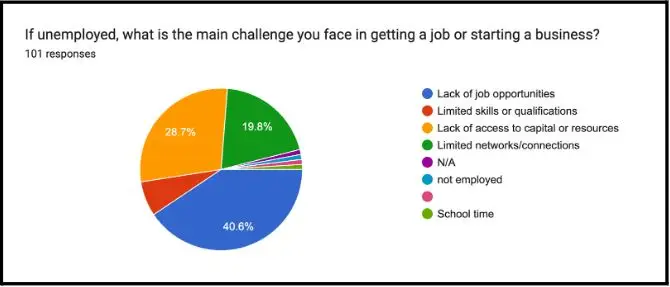
When asked about the biggest obstacles to employment or entrepreneurship, respondents highlighted:

  • Lack of access to capital as the biggest barrier.
  • Limited networks and connections that could help them find jobs or business opportunities.
  • The need for more practical skills training to match industry demands.

Skills and Training Needs

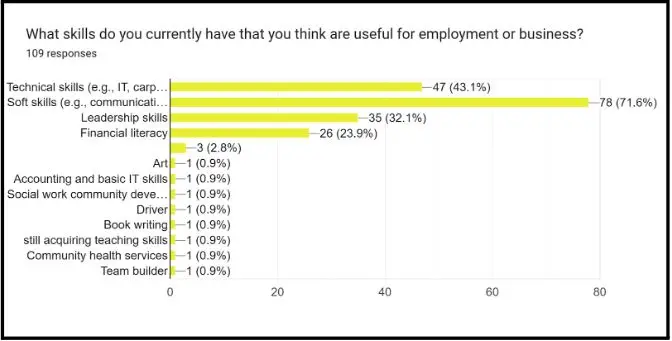
While many respondents already possess soft skills like communication and teamwork, others have technical skills in IT, carpentry, and finance. However, they expressed a strong desire for:

  • Digital and tech skills to stay competitive in the job market.
  • Business management and vocational training to help them start and sustain businesses.
  • Networking and mentorship opportunities to build connections in their fields of interest.

Aspirations for the Future

Over the next three years, respondents have set ambitious goals:

  • Secure stable employment in their chosen fields.
  • Start and grow their own businesses.
  • Gain new skills and education to increase their chances of success.

How JAY4T Can Support Youth Development

Respondents expressed a strong interest in JAY4T’s programs, with key areas of support including:

  • Networking opportunities to connect with mentors and employers.
  • Job placement services to help young people transition into the workforce.
  • Skills training and mentorship to equip them with practical, in-demand abilities.

Some also suggested that JAY4T offer hands-on training programs in innovation, vocational skills, and specialized trades like baking and creative arts.

Next Steps: Turning Insights into Action

This survey has provided valuable data that will inform JAY4T’s strategy for empowering youth through employment and entrepreneurship programs. By addressing the identified gaps, we aim to create meaningful opportunities for young people to build sustainable careers and businesses.

We invite stakeholders, partners, and youth themselves to collaborate with us as we implement solutions based on these findings. Together, we can transform challenges into opportunities and drive real impact in our communities.

Stay tuned for updates on how we turn these insights into action. If you’re a young person looking for support or an organization willing to collaborate, get in touch with us!

The role of the social economy in creating sustainable solutions for Africa’s challenges

At Jabulani Youths for Transformation (JAY4T), we are committed to fostering youth-led innovation and entrepreneurship as a pathway to sustainable development in Africa. As part of this mission, we are excited to contribute to the upcoming Annual Africa  Conference on Social Entrepreneurship (AACOSE) 2025, where we will delve into the vital role of the social economy in addressing Africa’s challenges.

Rethinking Development: From Dependence to Collective Ownership

For many years, African nations have relied on external aid and services that often come at a high cost. However, there has been a significant shift towards a social economy, where non-profit organizations and social enterprises prioritize people over profit, reinvest in communities, and embrace collective ownership models. This transformation is crucial in ensuring access to essential services such as healthcare, food, and employment—fundamental pillars of an improved standard of living.

The Social Economy as a Solution to Youth Unemployment

Unemployment remains one of the most pressing challenges faced by Africa’s youth. Limited job opportunities, corruption in hiring practices, and a shrinking job market have made it increasingly difficult for young people to secure decent employment. However, the rise of youth-led social enterprises has demonstrated the power of social innovation in job creation.

Youth across the continent are launching ventures that address societal issues while providing employment opportunities for themselves and their peers. Entrepreneur Support Organizations within the social economy have played a significant role in this movement by offering capital, mentorship, and training to help young innovators succeed. Despite this progress, challenges such as limited infrastructure and restricted market access continue to hinder the growth of youth-led enterprises. More investment in infrastructure and targeted support from established non-profits through advertising and networking will help unlock the full potential of young entrepreneurs.

Investing in the Social Economy for Sustainable Development

The social economy is directly linked to achieving multiple Sustainable Development Goals (SDGs), including No Poverty, Zero Hunger, and Decent Work & Economic Growth. By supporting youth-led initiatives and creating an enabling environment for social enterprises, Africa can drive inclusive economic growth while promoting community-driven solutions. Stakeholders—including governments, funders, and development organizations—must collaborate to invest in youth-driven social innovation and reinforce a solidarity-based economy that benefits all.


Transforming Feedback into Growth: JAY4T’s Journey to an Employment Collective

At Jabulani Youths for Transformation (JAY4T), we believe in the power of feedback to drive meaningful change. 

Rethinking Youth Unemployment Solutions

For years, both public and private sector players in Kenya have attempted to tackle youth unemployment through training programs, startup incubation, and capital provision. JAY4T initially followed similar approaches, offering capacity-building programs to empower young people. However, despite these efforts, unemployment rates in Kisumu continued to rise.

Through a deep process of reflection and feedback, we realized that our intervention models were not creating sustainable employment opportunities. We engaged with young people from our programs and beyond, actively listening to their experiences, skills, and aspirations. Their feedback revealed that traditional training and capital-focused interventions were insufficient. What they needed was a system that recognized them as human capital—not just as job seekers or beneficiaries, but as contributors to their local economies.

The Shift to an Asset-Based Approach

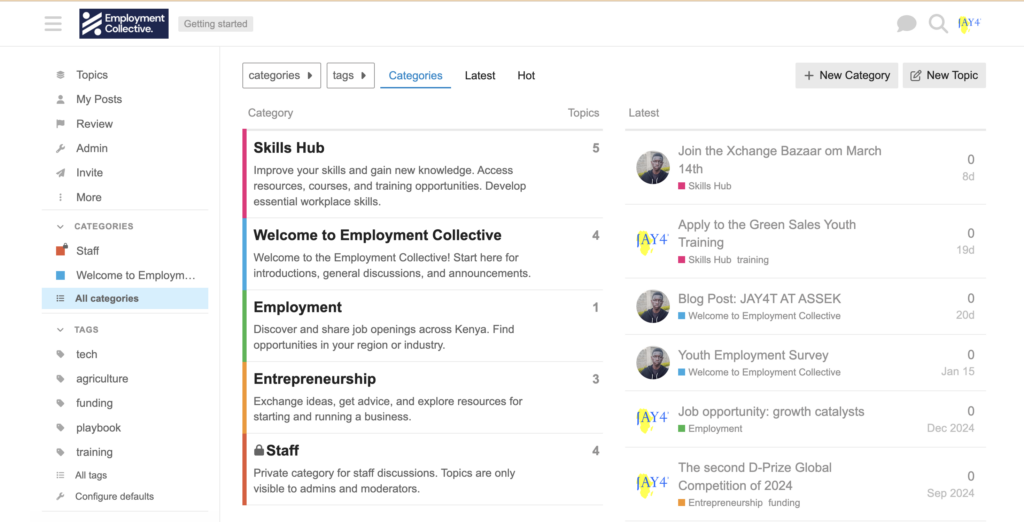
Inspired by insights from GlobalGiving’s Sharing Power Through Co-Creation Guide, we shifted our focus from aid and training to an asset-based entrepreneurship program. This new approach acknowledges the potential within young people and the resources they already have access to. Instead of designing programs in isolation, we created the Employment Collective, an interactive forum where unemployed youth can collaborate, share opportunities, and develop economic enterprises based on their existing skills and networks.

This transformation was fueled by active listening. By prioritizing the voices of young people, we learned that sustainable change comes from linking isolated talents and opportunities to create value. Our role evolved from being direct implementers to facilitators of connections, enabling youth to leverage their own strengths and resources.

The Role of Feedback in Sustainable Change

JAY4T’s journey underscores the importance of perceptual feedback in social impact work. Our experience has shown that effective listening goes beyond collecting opinions—it requires meaningful engagement, co-creation, and the willingness to pivot based on community insights.

Through our Employment Collective, we continue to act on the feedback we receive by:

  • Creating spaces for open dialogue, where young people can express their challenges and ideas freely.
  • Encouraging peer-to-peer collaboration, allowing youth to learn from and support each other.
  • Providing access to resources and tools, helping young entrepreneurs and job seekers turn ideas into action.
  • Continuously iterating on our programs, ensuring they remain responsive to the evolving needs of the community.

We remain committed to fostering a culture of listening and co-creation, ensuring that youth voices shape the future of of employment solutions in Kenya. We invite others to join us in this journey—whether by engaging in our Employment Collective, sharing insights on feedback practices, or collaborating on innovative solutions. Together, we can transform feedback into real, sustainable growth.

Employment collective interface
Employment Collective interface

JAY4T at ASSEK 2024

Insights from the ASSEK Annual Conference and Innovation Awards Gala 2024

The ASSEK Annual Conference and Innovation Awards Gala 2024, themed Collaboration4Impact: Economic Empowerment to Address Unemployment and Promote Sustainable Innovation, was an eye-opening event! It was a two-day event held at Emara Ole-Sereni in 2024. Its purpose was to bring together great minds to share innovative ideas on how to address the high unemployment rate and tips on how to make our organisations more effective, focusing on the growth of Entrepreneur Support Organisations (ESOs).

Transforming ESOs into Centers of Sustainable Innovation to Achieve Global Impact

This discussion emphasised that while ESOs are established to support entrepreneurs, they must also become self-sustainable to thrive. Experts in the field, through a panel discussion, highlighted that a significant challenge for ESOs is insufficient funding, which can cause the organisation’s operations to stall or collapse. 

ESOs were advised to focus on delivering valuable services that create and maintain a strong market reputation, establishing impactful partnerships that leverage combined resources and expertise with the stakeholders. ESOs should also diversify revenue streams to ensure smooth operations. This approach helps ESOs tailor their support for micro, small and medium enterprises (MSMEs) and startups while remaining resilient. 

 Leveraging AI to scale the socio-economic impact for startups and SMEs

We are living in times where AI is rapidly evolving, and businesses are continually integrating AI into their operations. The speakers highlighted the power of AI to simplify planning, research, and evaluation. They urged organisations to integrate AI strategies into their operations by first listing the potential challenges in society, and then identifying some AI solutions to help address the listed challenges. 

Organisations can effectively leverage AI by prioritising key areas and building affinity diagrams. The speakers, however, emphasised that applying strong cybersecurity measures is important to safeguarding organisations’ systems, networks, and programs from potential digital or cyber attacks, such as phishing or malware. Additionally, ESOs need to measure quantifiable metrics, which is essential to tracking progress and gaining actionable insights.

Improving Behavioural Competencies of  ESO Staff for Increased  Enterprise Outcomes

This session focussed on both the behavioural competencies of staff as well as the Sustainable Development Goals. Improving behavioural competencies among ESO staff is an important component of success. The event highlighted the value of having soft skills, such as persuasion, networking, independence, and self-confidence, which empower individuals to build strong professional relationships and positively influence others. 

When aligning your organisation’s mission and vision with the Sustainable Development Goals (SDGs), you should use the ‘AIM’ approach. This means being Authentic, Intentional, and Measuring your progress and success. This approach will enable you to enhance personal growth and achieve organisational excellence.

Achieving Organisational Excellence 

Have you ever sat down to evaluate the structure of your organisation? Have you achieved organisational excellence? 

Finally, the conference reminded us that achieving organisational excellence begins with a thorough evaluation or reevaluation of the organisation’s structure, leadership, and strategic planning. Organisation leaders are encouraged to define a clear vision, continuously assess every aspect of their organisation, and take steps to implement and monitor their programmes with determination. By addressing arising challenges from the root, organisations can drive meaningful and positive improvements and, therefore, achieve lasting success and excellence. 

The ASSEK annual conference and Innovation Awards Gala was a success and was quite inspiring. I gained a lot of insights on how to enhance our programmes and build a sustainable and innovative organisation. JAY4T looks forward to joining ASSEK in 2025 as a member organization and to collaborate with other Entrepreneur Support Organisations in the community to create employment solutions.

Do you have questions? Email us.

Kisumu, Kenya

info@jay4t.org

Newsletter

Get latest news & updates

© 2025 – Jabulani Youths for Transformation. All rights reserved.