
Maximizing Social and Environmental Impact in 2025: JAY4T’s Perspective
Jabulani Youths for Transformation (JAY4T) was honored to contribute to Business Fights Poverty’s Together for 2025 forum, sharing insights on how businesses can maximize their social and environmental impact in the coming year. As a youth-led nonprofit dedicated to economic empowerment and poverty alleviation, we believe that businesses must embrace three key principles in 2025: active listening, intentionality, and sustainability.
Priorities for Businesses to Maximize Impact in 2025
1. Active Listening: Understanding and Responding to Community Needs
For businesses to drive meaningful impact, they must not only listen but actively engage with the communities they serve. Impact is maximized when solutions are co-created with those who will benefit from them.
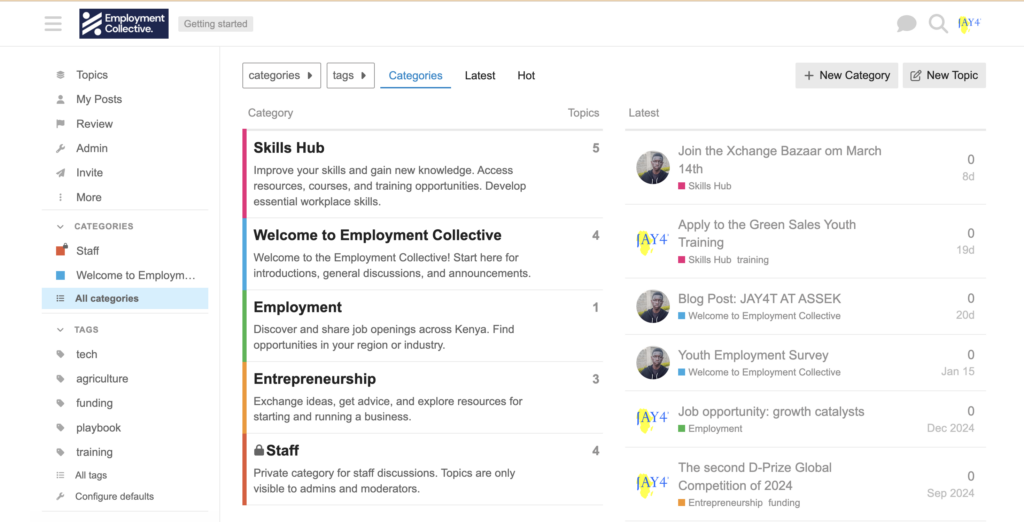
At JAY4T, we recognize that for our social enterprises and community initiatives to be effective, we must continuously listen to the voices of the youth. Our work spans multiple economic enterprises aimed at alleviating poverty, alongside a vibrant community platform that connects young people across the country. This platform provides entrepreneurship resources, skill development tools, and job opportunities. However, the effectiveness of these programs depends on how well they align with the real needs of the youth.
To ensure we stay relevant, we recently launched a youth employment survey to better understand the challenges young people face in securing sustainable livelihoods. This data will inform the evolution of our programs, ensuring that they remain responsive and impactful.
2. Intentionality: Purpose-Driven Business Practices
Social impact is not an afterthought; it requires deliberate and strategic planning. Businesses must embed social and environmental considerations into their core operations rather than treating them as peripheral activities.
For JAY4T, being intentional means structuring our programs to create lasting change. We don’t just create opportunities for youth—we ensure that these opportunities are sustainable, relevant, and empowering. Whether through our social enterprises or our community engagement platforms, every initiative is designed with a clear purpose and measurable outcomes in mind.
3. Sustainability: Building Resilient and Self-Sufficient Organizations
One of the greatest challenges facing social enterprises and impact-driven businesses in 2025 will be financial sustainability. Many organizations rely heavily on grants, but this model alone is not sufficient for long-term growth and resilience.
To address this, organizations must diversify their revenue streams, incorporating business models that generate income while advancing their mission. At JAY4T, we are actively exploring multiple funding sources to ensure the sustainability of our programs, including partnerships, investments in social enterprises, and revenue-generating initiatives.
Overcoming Challenges in 2025
The biggest challenge the social impact community will face in 2025 is ensuring long-term sustainability. While external funding can provide an initial boost, organizations must build models that allow them to sustain and scale their impact independently. Businesses and nonprofits alike must innovate, leveraging technology, strategic partnerships, and hybrid funding models to create resilience.
Guidance for Corporate Social Impact Leaders in 2025
If there is one piece of advice we would offer to corporate social impact leaders stepping into 2025, it would be this: focus on achieving organizational excellence before scaling impact.
Before expanding programs or launching new initiatives, businesses must evaluate their internal operations to ensure they are running efficiently and effectively. A strong foundation allows for greater and more sustainable impact.
As we step into 2025, the call for businesses and social enterprises is clear—listen actively, act intentionally, and build sustainability into every aspect of impact work. At JAY4T, we remain committed to these principles as we continue to empower youth and drive transformative change in our communities.
By working together with businesses and other stakeholders, we can create a future where social and environmental impact is not just an ambition, but a reality.